Spiti, literally meaning "The Middle Land", is a mystical cold desert mountain wonderland isolated from the world by massive Himalayan walls. Perched along the braided turquoise Spiti River, this high plateau cradles thousand-year-old cliffside Buddhist gompas, ancient mud citadels, moon-like geological gorges, the world's highest inhabited settlements, and pristine starry skies of cosmic clarity.
2 Corridors
Shimla & Manali loopsJun - Oct
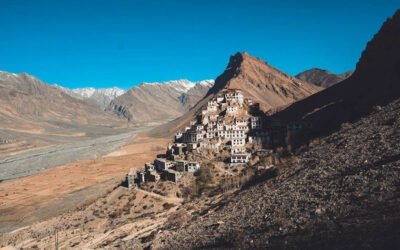
& Jan-Feb (White Spiti)Dramatic multi-tiered fortress gompa crowning a cone hill over the Spiti River
What makes Spiti an otherworldly experience beyond modern reality?
The wind howls softly across the barren brown canyons, carrying the flutter of thousands of lungta (prayer flags) strung across high suspension bridges, whispering Buddhist peace mantras to the skies.
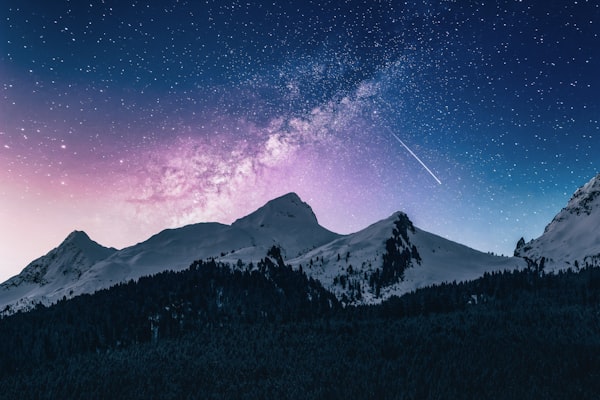
With zero light and air pollution at 4,000+ meters, the night sky transforms into a dazzling celestial highway where the Milky Way's galactic core stretches directly above your head in breathtaking 3D depth.
Inside centuries-old clay and mud prayer chambers, the sacred fragrance of wild juniper incense mingles with flickering yak butter lamps and the warming comfort of salted butter tea served by red-robed lamas.
Millennia-old monastic citadels, clay murals, and spiritual seats perched on sheer cliffs.
11th-Century Fortress Monastery
The biggest and oldest monastery in Spiti. Built as a Pasada fortress on a conical rock hill, it houses precious thangkas, ancient manuscripts, and sacred musical trumpets. Serves delicious herbal tea to all visitors.
Cliffhanger Castle over River Confluence
Literally meaning "Fort on a Cliff". Precariously perched on the edge of a razor-sharp 300m cliff overlooking the confluence of the Spiti and Pin rivers. Once the ancient capital of the rulers of Spiti.
The "Ajanta of the Himalayas"
Over 1,030 years old, this mud-brick UNESCO World Heritage candidate preserves the purest Indo-Tibetan clay statues, life-sized bodhisattvas, and breathtaking 10th-century wall frescoes in 9 prayer temples.
Commercial & Cultural Epicenter
Divided into Kaza Khas (old town) and Kaza Soma (new township). Bustles with traveler cafes, handmade wool and yak cheese shops, Tibetan bakeries, and the world's highest retail fuel petrol pump.
Seat of the Tantric Nyingmapa Order
The second oldest monastery in Spiti and the only one belonging to the Nyingmapa sect. Famous for dramatic sword dances performed during the annual Buchen festival in the dramatic red Pin Valley.
Among the World's Highest Gompas
Belonging to the Sakya school, this fortified castle-like monastery stands sentinel over the extreme high-altitude village of Komic. Its central sanctum holds ancient stuffed wild animals and protective deities.
Turquoise glacial waters, celestial mountain passes, and the highest inhabited outposts on Earth.
Crescent Turquoise Alpine Jewel
Named for its crescent moon shape, this pristine Ramsar wetland lake shifts colors from emerald green to deep cobalt blue as sunlight dances on the surrounding scree slopes of the Chandra Bhaga range.
Gateway Between Lahaul & Spiti
One of India's highest motorable passes. Travelers stop to complete a sacred clockwise circumambulation around the Kunzum Mata stupa. Offers awe-inspiring vistas of Bara-Shigri, the 2nd longest glacier in the Himalayas.
World's Highest Operational Post Office
Functioning since 1983 in a traditional stone and mud house, postal staff still hand-stamp and dispatch postcards sent by travelers across the world via foot couriers down to Kaza.
World's Highest Motorable Settlement
Meaning "Eye of a Snow Cock", this tiny whitewashed village with barely 150 residents is the highest village in the world connected by motorable road. Features the high-altitude Spiti Organic Farm Cafe.
Fossil Village of the Tethys Sea
Dominated by a colossal 1,000-year-old golden Buddha statue gazing towards the sacred snow pyramid of Chau Chau Kang Nilda. The village soil is rich in prehistoric marine ammonite fossils from the ancient Tethys Sea.
Snow Leopard & Ibex Territory
The last motorable outpost of the dramatic Pin Valley National Park. Surrounded by striking pink, green, and purple geological mountains, Mudh is the trailhead for the treacherous Bhaba and Pin-Parvati high pass treks.
The premier central Kaza loop covering high gompas, highest post office, and lunar lakes.
Arrive in Kaza (ensure gradual acclimatization if driving via Manali or Kinnaur). Rest during the morning and sip warm garlic soup. In the afternoon, drive 14 km along the Spiti riverbed to Key Monastery. Climb through the centuries-old mud stairs, spin ancient prayer wheels, and enjoy salted butter tea with monks while taking in the sunset over the valley.
Ascend to Langza to view the majestic golden Buddha overlooking the 6,303m Chau Chau Kang Nilda peak. Search for ancient marine fossils along the scree. Drive to Komic (4,587m) to visit Tangyud Monastery, and end at Hikkim (4,400m) to hand-post written postcards from the highest post office on planet Earth.
Head downstream to Dhankar cliff monastery perched high over the confluence of the Spiti and Pin rivers. Hike up to Dhankar Lake if energy permits. Drive into the crimson canyons of Pin Valley to explore Kungri Monastery, then reach Tabo to marvel at the 996 AD UNESCO mud temples and intact millenarian bodhisattva frescoes.
Traditional trans-Himalayan Tibetan recipes engineered for mountain stamina.
Soft steamed floral yeast bread rolls paired with fiery stir-fried mountain vegetables, paneer, or spiced mutton shaptak.
Flat bite-sized hand-pulled noodles simmered in aromatic broth of garlic, mountain radishes, ginger, and local leafy greens.
Roasted Himalayan barley flour kneaded with salty churned yak butter tea (Po Cha). The ultimate endurance food of high lamas.
Brewed from wild golden-orange thorny berries gathered on Spiti riverbeds, bursting with high vitamin C and oxygen boosters.